
My learning system, demonstrated on the RHCSA: the exam I passed with one mistake.
There's a version of this story where I'm simply good at exams. This is not that version. This one has a system, and the system is the point: I've used it for every certification since, and it's currently chewing through AWS Solutions Architect Professional, one protected hour at a time.
A confession first, because it explains everything that follows. I'm a min-maxer. It's a gaming term: you build your character to squeeze maximum output from the points you actually have, and you refuse to spend a single point where it doesn't count. I sold the gaming setup a while ago. The min-maxing stayed. It now runs my study plans.
My result: 286 out of 300 (passing is 210). Eight of nine objectives at 100%. The one dent, 89%, was in the objective named "understand and use essential tools." The essential ones. As far as I can reconstruct, the mistake was a grep command. I have used grep roughly daily ever since. We've moved past it. Mostly.
Also, for the record: Manage basic networking: 100%. I'm a network engineer. I should hope so.
But to appreciate the system, you have to see the one it replaced.
The old way: CCNA
My first job in tech trained us properly, and I mean properly: we crimped our own RJ45 ends, straight-through and crossover, and learned with copper in our hands why the wiring order mattered. Then I enrolled in a Cisco Networking Academy and did the curriculum the traditional way. A school, a syllabus, fixed hours, months of it.
And I blogged the whole journey as I went. That blog is dead now, but the Internet Archive keeps the receipts: pages on how a LAN works, how packets travel, how many bytes of header TCP spends versus UDP (twenty against eight, and yes, I still remember). That era deserves its own post, and it will get one.
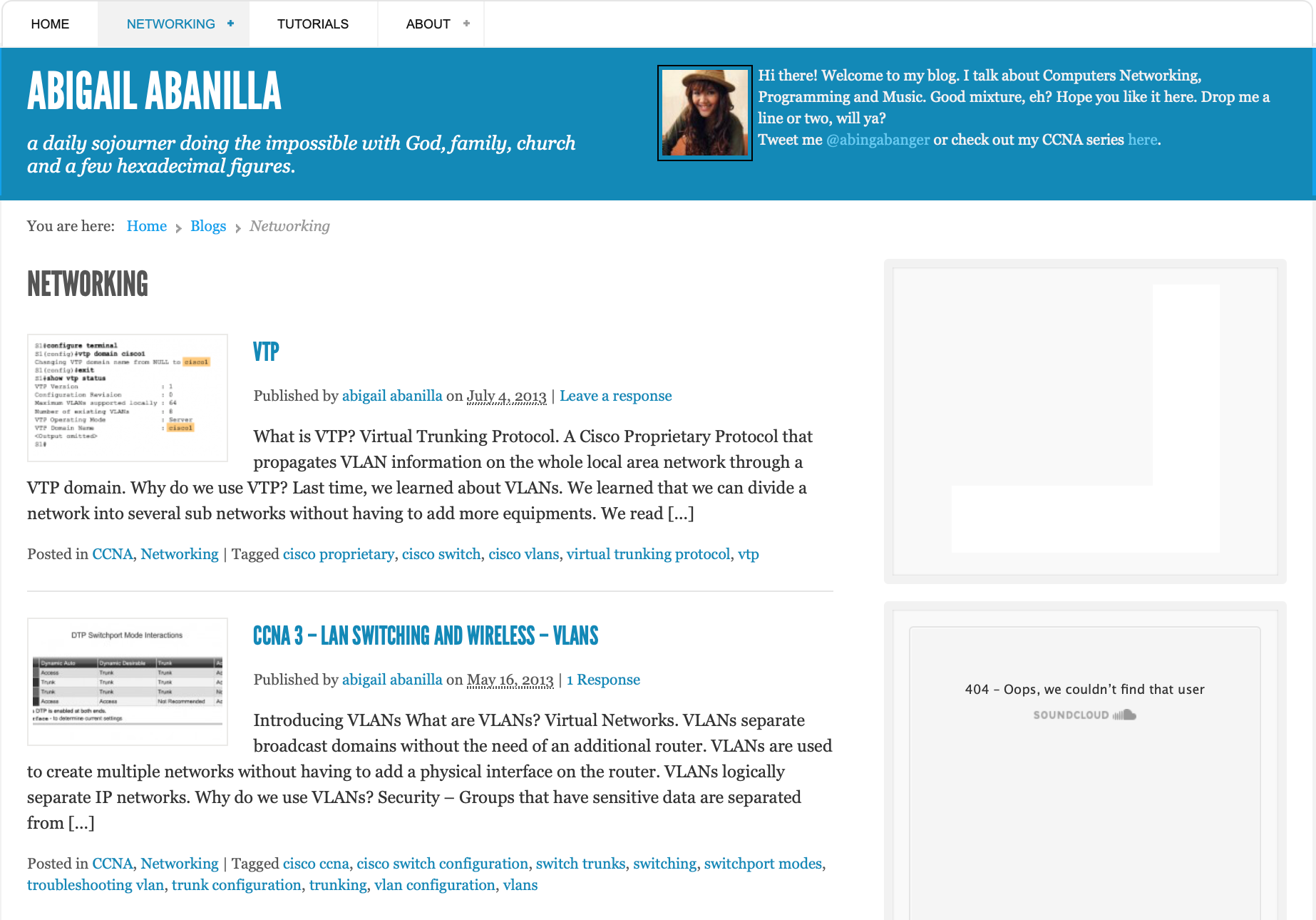
Here's the thing: the blogging wasn't a side hobby. It was the method, before I knew to call it one. This was back in 2013, when AI didn't yet exist and I had not heard of exam dumps, ever. I have a learning quote I live by: if I know the material well enough that I can teach it, I really, really know it. The blog was where I taught it, to an audience of approximately nobody, and teaching it was how I knew it had stuck. I passed the CCNA at 722 out of 800.
Notice what that path required, though. An employer willing to train me. An academy with a curriculum. Classmates and instructors to pull understanding from, at their hours, not mine. All good things. All gatekeepers, too.
The new way: RHCSA
More than a decade later I sat the RHCSA, Red Hat's hands-on Linux exam. No multiple choice: you sit at a machine and you either configure it or you don't. This time there was no academy, no employer classroom, no cohort. The curriculum was one book. The faculty was an AI.
1. One source, cover to cover
I'm not a video-tutorial person. I know this about myself, and knowing it saved me weeks. So: one canonical book, Sander van Vugt's RHCSA cert guide, read cover to cover. Not three courses, a playlist, and seventeen tabs. One source, finished.
Collecting learning materials feels like progress. It isn't. Finishing one is. (Min-max rule number one: points spent on gathering are points not spent on learning.)
2. Turn the AI into your personal tutor
This is the step I want to underline, because this is where the decade shows.
Reading a chapter is not the same as understanding it, and understanding it in general is not the same as understanding it with the brain you actually have. In my CCNA years, the translation from textbook to my head was done by instructors, classmates, and slow repetition, at fixed hours, in a fixed room.
Now I recruit AI for it. Not to summarise in general, but to summarise for me. First I gave it my background: my CV (edited), the systems I already knew well, where my depth was. Then, chapter by chapter:
Here's my background and what I already know well: [attach CV, list your strong areas]. Summarise this chapter for someone with exactly that background. Skip what I clearly already know. Flag what's genuinely new to me and slow down there.
And for the parts that refused to stick:
I don't understand [LVM snapshots]. I do understand [VLANs, routing tables, network config]. Explain it to me using an analogy from what I already know.
Analogies from your existing skills are cheat codes. A concept that wouldn't land in the book's language landed instantly in mine. You've spent years building expertise in something. Make the new material walk over that bridge instead of building a new one.
That's a personal tutor. One that has read your CV, never tires of your questions, never makes you feel slow, and is available at 11pm on a Tuesday. The version of me crimping cables after work would not have believed it.
3. Build the lab before you feel ready
VMware Workstation is free. I set up my own VMs and did every exercise in the book on them. Did. Not read, not watched, not nodded along to. Typed, broke, rebuilt.
For a lab exam this isn't a study tip, it's the whole game. But I'd argue it's the whole game for everything else too. Your hands hold knowledge your eyes can't.
4. Hunt beyond the book
When the book's exercises ran out, I googled sample questions and worked through those as well: other people's phrasings, other people's traps. The book teaches you the material; the wild questions teach you the material wearing a disguise.
5. Schedule the exam when the mocks say so, not when you feel ready
I didn't sit the RHCSA when I felt ready. Feelings are unreliable narrators. I sat it after I could clear the practice exams perfectly. Not mostly. Perfectly. And my old bar still applied: could I have taught each objective? RHCSA is purely practical, so there was nothing to memorise. There was only the question of whether my hands knew.
They knew. One mistake.
The tutor in the machine
This is bigger than my exam, and it's not an accident.
Before ChatGPT even launched, in the summer of 2022, Sam Altman and Greg Brockman took an early GPT-4 to Sal Khan of Khan Academy, and that preview became Khanmigo, an AI tutor, launched in March 2023. Education wasn't an afterthought for this technology; it was one of the first doors they knocked on. Altman said it plainly in 2023: education is "very high on the list of things I am most excited about." He pointed at a gap teachers have known about for decades, that "the difference between classroom education and one-on-one tutoring is like two standard deviations", and most families can never afford the tutor. His hope was "one-on-one tutoring to every child."
I read ambitions like that when ChatGPT first came out, and they're the reason I was excited about AI from the start: I could see the possibilities he was describing. Then I lived one of them. I studied for a Red Hat exam with a tutor that had read my CV, drew its analogies from my own career, and charged me nothing. The promise held.
Which leads to the slightly uncomfortable truth of learning anything in this decade. The gatekeepers from my CCNA story are optional now. The employer training programme, the academy, the tuition, the schedule: all of it has a free or nearly-free substitute. What's left is time and motivation. That's all. Which means that's also the whole excuse budget.
The system, portable
- Match the medium to your brain. Not a video person? Stop forcing videos. The best format is the one you'll finish.
- Make the material meet you where you are. Your background is an asset; use it as the bridge. AI makes this nearly free.
- Hands over highlighters. Build the lab. Do the thing the exam does. AI can't take the exam for you.
- Teach it to know it. If you can't explain it, you don't have it yet. Write the post, tell the rubber duck, brief the tutor back. You will carry the knowledge to the end of your days.
- Readiness is measured, not felt. Perfect the mock exams before you pay for the real one. Aim for the highest score and you'll land far from failing.
One more thing. A certificate is leverage, not permission. I didn't wait for the paper to do the work. I was already doing the work, and the paper caught up.
So: what's your hard thing? Go learn it. And triple-check your grep.

Discussion